Detection might take seconds, but response takes much longer in most cases. It depends on how long it takes an analyst to reach that alert in the queue. Often, that gap – and not the breach itself – is what decides how much damage gets done.
The fix does not lie in more analysts working faster. It is removing the wait itself, so a response begins the moment a threat is confirmed, and not once someone gets around to it.
That is the gap this category of tools is built to close. This blog covers what they are, why they matter for Indian enterprises, the forms they take and how AI is changing what they can do.
What are incident response automation tools?
These are software systems that carry out predefined actions, such as isolating an endpoint, blocking an IP address or gathering forensic evidence, without waiting for an analyst to trigger each step manually.
They sit between detection and resolution. A detection tool flags something suspicious. Instead of that alert simply waiting in a queue, the automation tool starts acting on it immediately, based on rules or learned patterns.
Analysts still make the final call on complex incidents. What changes is how much groundwork is already done by the time they get involved.
Why incident response automation tools matter for Indian enterprises
India’s regulatory clock leaves very little room for manual, alert-by-alert response.
- The CERT-In six-hour rule sets the pace: Under CERT-In’s 2022 Directions, organisations must report specified cyber incidents to CERT-In within six hours of noticing them. That clock starts the moment an incident is noticed, not once a full investigation is complete. Manual triage alone makes that timeline difficult to hit consistently.
- SEBI and RBI add further reporting expectations: SEBI’s CSCRF and RBI’s cybersecurity guidelines both expect regulated entities to detect, contain and report incidents quickly, with clear documentation for auditors.
- Analyst teams stay lean: Indian firms are working with the same global shortage of skilled security analysts as everyone else. Automation lets a smaller team meet strict reporting timelines without needing to scale headcount at the same rate as incident volume.
Examples of incident response automation tools
Incident response automation shows up at different points in the response lifecycle. Here are the areas it typically covers:
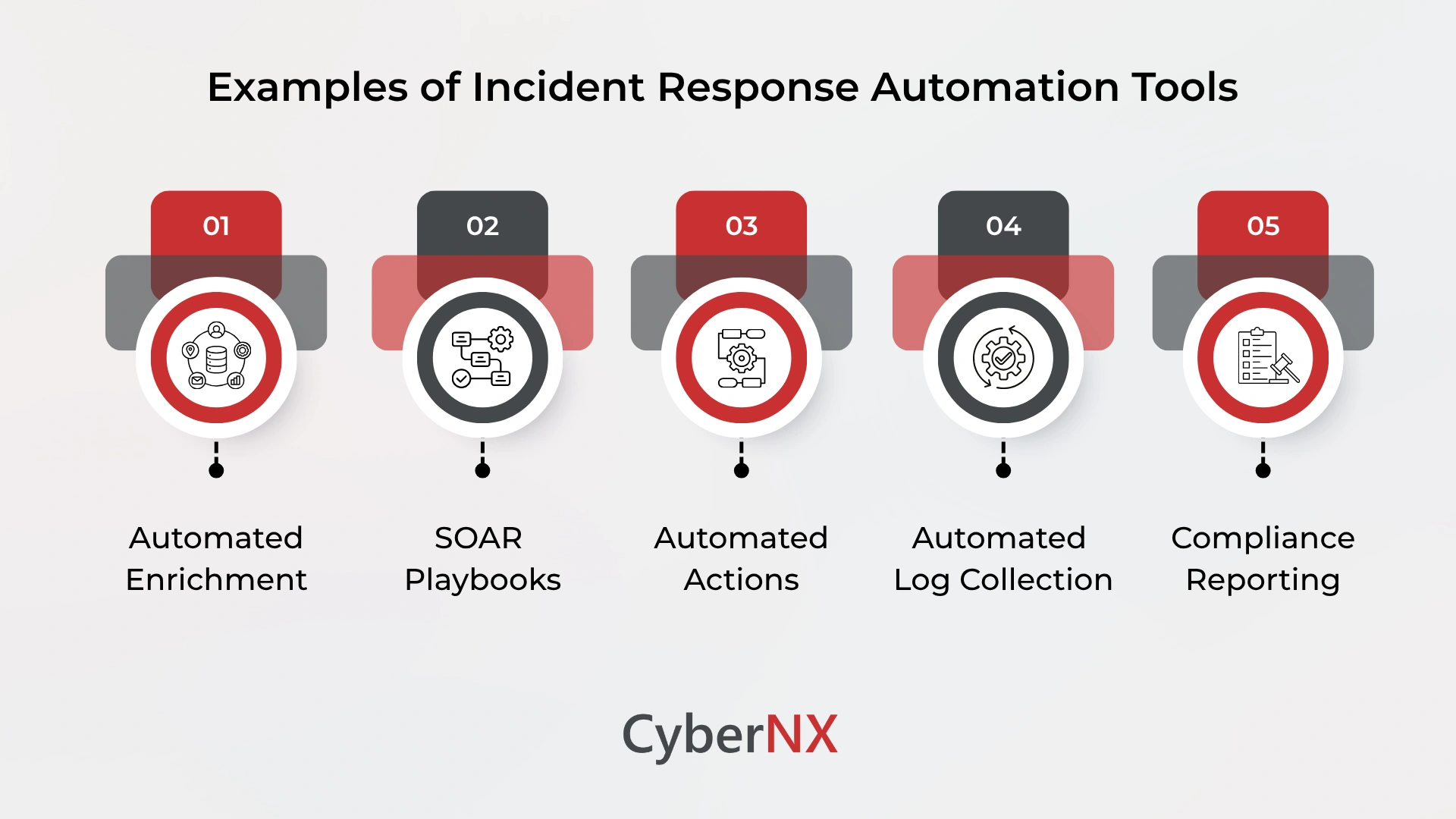
- Automated alert triage and enrichment: Alerts are automatically tagged with asset, user and threat intelligence context, so analysts start with a clearer picture instead of a raw alert.
- SOAR playbooks: Predefined workflows execute a sequence of response steps automatically once a specific incident type is confirmed.
- Automated containment actions: Endpoints get isolated, malicious IPs get blocked and compromised accounts get disabled without waiting on manual approval for routine cases.
- Automated forensic and log collection: Relevant logs, memory snapshots and system data are pulled automatically the moment an incident is flagged, preserving evidence before it is lost.
- Automated compliance reporting: Incident timelines, actions taken and evidence are logged automatically, supporting CERT-In, SEBI and RBI reporting requirements.
AI SOC tools for incident response automation
Traditional SOAR playbooks only work for incidents they were built to handle. A new pattern, and the playbook falls short.
AI SOC tools for incident response automation take a different approach. Instead of only following fixed rules, they learn from historical incidents, correlate signals across your SIEM, EDR and network tools, and adapt as new threat patterns appear.
This does not remove the analyst from the loop. It changes what reaches them. Instead of raw, unfiltered alerts, analysts increasingly review AI-enriched cases with context, correlation and a recommended action already attached.
How to choose the right incident response automation tools
Not every enterprise needs the same starting point. A few things worth weighing before committing to a platform:
- Integration depth: The tool should connect cleanly with your existing SIEM, EDR and network security stack, not force a rebuild.
- Compliance fit: Confirm the platform can generate the audit trails CERT-In, SEBI and RBI expect, not just generic activity logs.
- Escalation control: Critical or ambiguous incidents should still reach a qualified analyst, not just close automatically.
- Managed vs in-house: A managed service gets you 24×7 coverage and tuning without building the automation stack yourself.
Conclusion
These tools let Indian firms meet strict reporting timelines like CERT-In’s six-hour rule, without needing a large analyst team working around the clock.
CyberNX’s AI Managed SOC as a Service combines automated triage, containment and compliance-ready reporting with expert analyst oversight, built for CERT-In, SEBI and RBI-regulated businesses. If you are ready to bring incident response automation tools into your security operations, talk to our team today.
Incident Response Automation Tools FAQs
What are incident response automation tools?
They are software systems that automatically carry out response actions, such as isolating endpoints, blocking malicious IPs or collecting forensic evidence, without waiting for manual action on every step.
What are examples of incident response automation tools?
Common examples include automated alert triage, SOAR playbooks, automated containment actions, automated forensic log collection and automated compliance reporting.
How are AI SOC tools different from traditional SOAR playbooks?
AI SOC tools learn from historical incidents and correlate signals across tools, adapting to new threat patterns, while traditional SOAR playbooks only handle the specific scenarios they were built for.
Do incident response automation tools help with CERT-In compliance?
Yes. They help enterprises meet CERT-In’s six-hour incident reporting rule by generating timestamped logs and evidence automatically, rather than relying on manual documentation under time pressure.