“There are only two types of companies: those that have been hacked and those that will be.” — Robert Mueller, Former FBI Director
Today, a growing number of those breaches are first discovered not inside corporate networks, but on hidden parts of the internet.
Credentials appear in underground forums. Customer databases are traded in cybercrime marketplaces. Corporate email addresses surface in breach datasets long before organisations realise something is wrong.
For security teams, these signals often arrive in the form of dark web monitoring alerts. But here’s the challenge: not every alert indicates a real threat.
Some alerts signal active risk that needs immediate investigation. Others simply reflect historical breaches, outdated datasets or generic references to company domains.
The real task for CISOs and SOC teams is learning how to separate actionable intelligence from background noise.
This guide explains how these alerts work, what actionable alerts look like, and how security teams can prioritise them effectively to focus on the threats that truly matter.
What is a dark web monitoring alert?
It is a kind of alert that’s generated when sensitive info related to an organisation appears in hidden or restricted online environments.
These alerts typically surface when monitoring systems detect:
- Employee credentials in underground forums
- Stolen customer data being traded
- Corporate email addresses in breach databases
- Mentions of company domains in fraud marketplaces
- Discussions of vulnerabilities related to the organisation
Understanding what is a dark web monitoring alert is critical because alerts are often the first signal that an organisation’s data or identity has been exposed.
Without monitoring, these exposures can remain undetected for months.
Why dark web monitoring alerts matter for security teams
Cybercriminals often trade stolen data long before organisations realise it has been compromised.
For security teams, dark web monitoring alerts provide visibility into threats that traditional security tools cannot detect. These alerts help identify risks like credential leaks, identity misuse or stolen data circulating in hidden networks.
The benefits of monitoring alerts include:
- Early detection of compromised credentials
- Faster response to potential data breaches
- Visibility into threat actor discussions
- Intelligence about ongoing cybercrime activity
Security leaders increasingly treat these alerts as part of their digital risk protection strategy.
Types of dark web monitoring alerts security teams receive
Not every alert indicates the same level of risk. Security teams typically encounter several categories of alerts.
- Credential exposure alerts: These alerts occur when employee usernames or passwords appear in breach datasets or cybercrime marketplaces. They are often generated when monitoring systems detect company email domains in credential dumps.
- Data leak alerts: Data leak alerts appear when internal files, documents, or databases appear in dark web forums. These alerts may indicate an ongoing breach or a previously undiscovered exposure.
- Brand impersonation alerts: Attackers sometimes use corporate branding to conduct phishing campaigns or fraud. Alerts may appear when threat actors mention company names or domains in underground discussions.
- Marketplace listing alerts: These alerts appear when cybercriminals try to sell access to corporate networks or stolen data. Security teams should review these alerts carefully because they may signal serious compromise.
What makes a dark web monitoring alert actionable
Actionable alerts require investigation and response because they represent credible risk. Security teams should prioritise alerts when they involve:
- Verified credential leaks: Credentials appearing in fresh breach datasets or criminal marketplaces.
- Proof of network access sales: Listings where attackers claim to sell access to corporate systems.
- Active phishing campaigns: Fraud operations that target employees or customers using the company’s identity.
- Sensitive data exposure: Financial records, internal documents or customer data appearing in underground markets.
These scenarios represent high-priority dark web monitoring alerts because they may indicate immediate security incidents.
What makes a dark web monitoring alert noise
Not every alert needs urgent action. Security teams often receive alerts that provide context but do not represent immediate threats.
Examples include:
- Old breach data: Historical credential dumps that were already remediated.
- Publicly available information: Company domains or names mentioned in discussions not related to security incidents.
- Generic credential databases: Mass datasets containing outdated or previously exposed information.
- Duplicate alerts: Multiple alerts triggered by the same base event.
Understanding the difference between signal and noise helps security teams manage dark web monitoring alerts more effectively.
How security teams should triage monitoring alerts
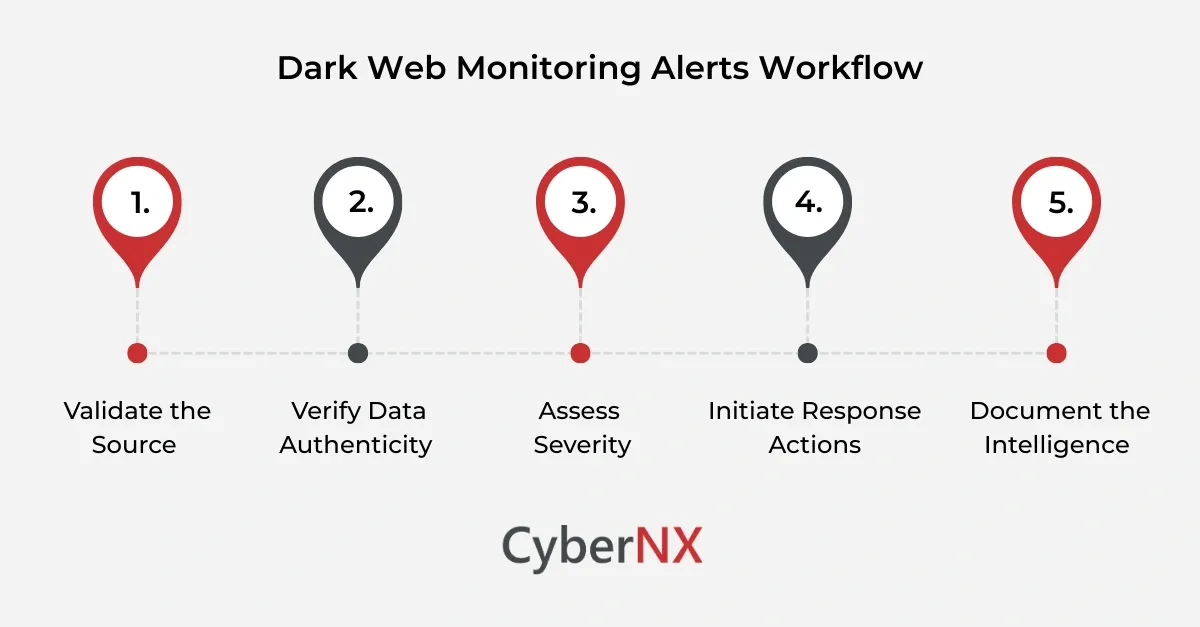
Dark web monitoring is only effective when alerts feed into structured workflows.
- Validate the source: Confirm whether the alert originates from credible underground communities.
- Verify data authenticity: Check whether the exposed information belongs to the organisation.
- Assess severity: Determine whether the exposure creates immediate risk.
- Initiate response actions: Reset credentials, notify affected users or escalate incidents.
- Document the intelligence: Record findings to strengthen threat visibility.
A disciplined workflow makes sure that these alerts give actionable security data.
Integrating dark web monitoring alerts to security operations
Monitoring alerts should not operate in isolation. Security leaders should integrate dark web alerts with existing security operations.
Key points include:
- Security information and event management platforms
- Incident response playbooks
- Threat intelligence feeds
- Identity and access management systems
- Security operations centre workflows
When alerts feed into these systems, security teams get better visibility into new risks.
Common mistakes when handling monitoring alerts
Many organisations struggle with alert fatigue. Common mistakes include:
- Ignoring contextual intelligence: Alerts may contain useful threat insights even if they are not critical.
- Treating every alert as an emergency: This leads to investigation overload.
- Operating without prioritisation rules: Without defined criteria, teams waste time analysing low-risk events.
- Failing to validate sources: Not all dark web intelligence is reliable.
Conclusion
Dark web monitoring provides visibility to hidden threats. But the real value is in understanding which alerts require action.
Some alerts indicate immediate risk. Others simply provide contextual intelligence. Security teams that distinguish between the two can focus their efforts where it matters most.
Effective alerts help organisations detect credential leaks, data exposure, brand impersonation and cybercrime activity early enough to respond.
We provide fast cyber defence capabilities through advanced technology, real-time alerts, global monitoring coverage, expert analysis, proactive threat detection and compliance-aligned reporting. Our dark web monitoring services help security teams detect risks before they become incidents.
If your organisation wants deeper visibility into dark web monitoring alerts, hidden threats and actionable intelligence, connect with us to build a proactive monitoring strategy.
Dark Web Monitoring Alerts FAQs
What is a dark web monitoring alert?
A dark web monitoring alert is a notification generated when sensitive organisational data like credentials or documents appear in hidden online communities or breach datasets.
Are all dark web monitoring alerts critical?
No. Some alerts indicate real threats while others provide contextual intelligence. Security teams must validate and prioritise them.
How often should security teams review monitoring alerts?
Security teams should review alerts continuously and integrate them into SOC workflows for faster investigation.
Can dark web monitoring stop data breaches?
Monitoring cannot stop breaches directly but it helps to detect early signs of exposure so organisations can respond fast.
Who should manage dark web monitoring alerts in an organisation?
These alerts are typically handled by security operations teams, threat intelligence analysts or digital risk protection teams.