In May 2026, CERT-In gave organisations just 12 hours to stop a known attack on internet-facing systems. Ten years back, teams took weeks to fix a flaw. Now the clock runs in hours.
No team can patch that fast manually. Security staff juggle hundreds of open issues, tight change windows and approval steps that take days to clear. This is where automated vulnerability remediation steps in.
This guide explains what it means, walks through real examples and shows how it helps Indian BFSI organisations close findings faster while staying aligned with SEBI CSCRF and CERT-In timelines.
What is automated remediation?
Automated vulnerability remediation is the practice of fixing security weaknesses using predefined rules and tools, without waiting for a person to action each ticket. A scanner or detection tool identifies the issue. A remediation engine then applies the fix, whether that is a patch, a configuration change or a virtual block at the network edge.
The goal is not to remove people from the process. It is to remove the delay between finding a weakness and closing it, while keeping a human in the loop for anything with high business impact.
Why patch delays keep growing
The vulnerability count keeps climbing and remediation has not kept pace. A few figures explain why automation matters now:
- Edgescan’s 2026 Vulnerability Statistics Report puts the average time to remediate high and critical application and API vulnerabilities at 54.81 days across 2025.
- SEBI’s CSCRF circular expects regulated entities to close identified vulnerabilities within three months of a VAPT report, and high-severity findings tied to missing patches within one week.
Against these numbers, a manual, ticket-by-ticket approach to patching, struggles to keep up, especially for BFSI entities that face both regulatory deadlines and a wider attack surface.
What is an example of automated remediation?
Automated remediation covers a range of actions, from a routine dependency update to a network-level block. Common examples include:
- Automated patch deployment: A patch management tool detects a missing update on a server fleet and pushes it out on a schedule, without a technician touching each machine.
- SOAR-triggered playbooks: A security orchestration platform receives a vulnerability alert, checks asset criticality, then opens a ticket, applies a fix and reruns a scan to confirm closure.
- Virtual patching: When a code fix is not ready, a web application firewall rule blocks the exploit path at the network edge until the underlying flaw is fixed.
- Configuration drift correction: A cloud security posture management tool detects a misconfigured storage bucket or open port and resets it to the approved baseline.
- Endpoint isolation: An endpoint detection and response tool quarantines a device showing signs of active exploitation while the vulnerability is patched.
Most mature security programmes combine several of these, using automation for high-volume, low-risk fixes and human review for anything that could disrupt a critical system.
How automated remediation works
The process generally follows four stages, though the tools involved can vary by organisation.
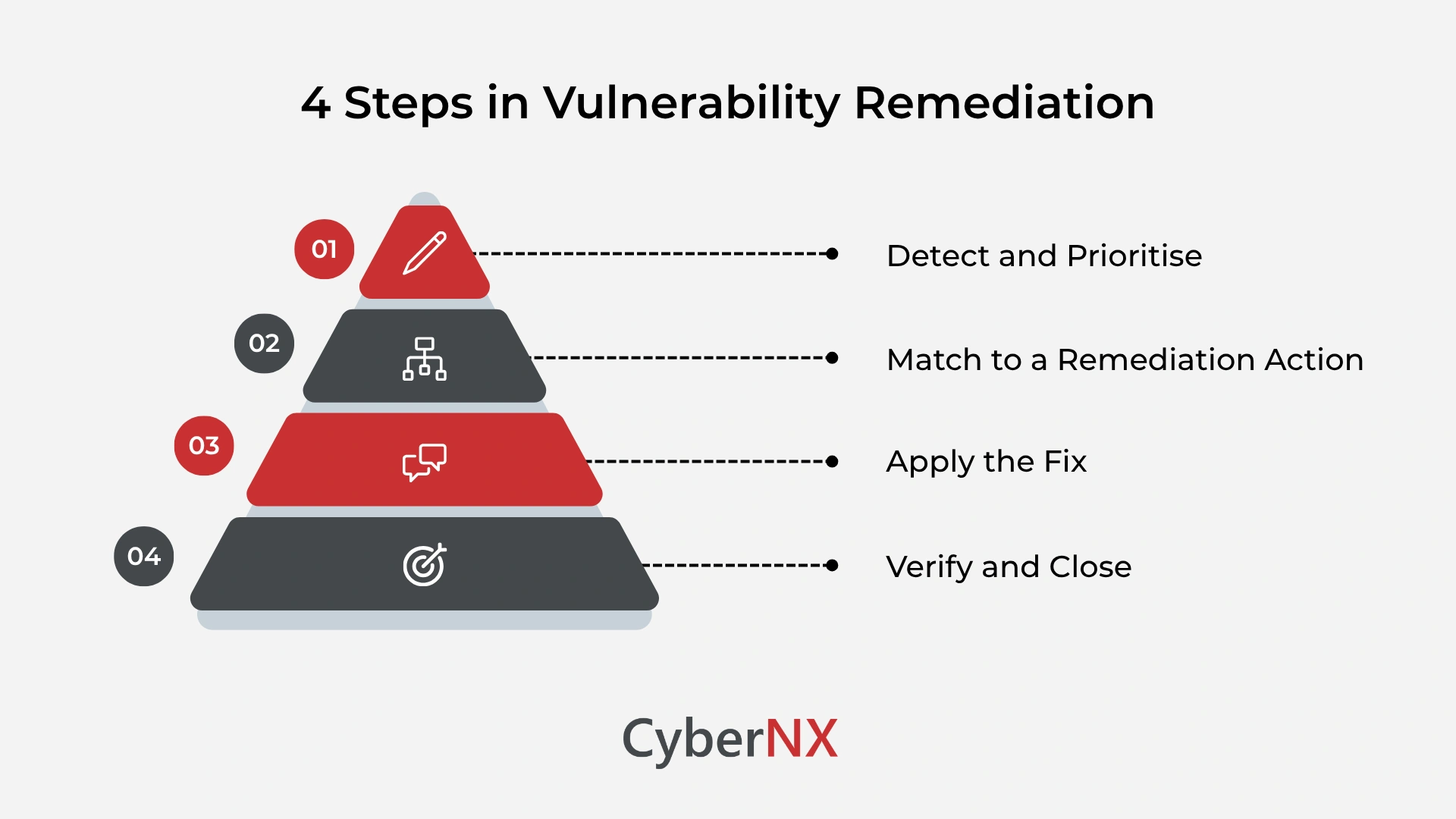
- Detect and prioritise: A vulnerability scanner or continuous monitoring tool flags weaknesses and ranks them by exploitability and asset value.
- Match to a remediation action: The system checks whether a patch, script or configuration fix exists for the finding, and whether it meets the criteria for automatic action.
- Apply the fix: The remediation engine deploys the patch, updates the configuration or applies a virtual patch, usually in a staged rollout to limit blast radius.
- Verify and close: A rescan confirms the fix worked. The system updates the ticket and the audit trail, which matters for SEBI CSCRF and RBI reporting.
Testing fixes in a staging environment before wider rollout keeps this process safe. A failed automated fix on a production system can cause more disruption than the vulnerability it was meant to close.
Meeting SEBI CSCRF and CERT-In timelines
For BFSI organisations, this is not only an efficiency play. Automated remediation supports the specific deadlines Indian regulators have set:
- SEBI CSCRF requires closure of identified vulnerabilities within three months, and a one-week window for high-severity findings from unpatched systems.
- CERT-In’s 2026 guidance sets an indicative 12-hour containment expectation for known exploited vulnerabilities on internet-facing assets, alongside its existing six-hour incident reporting requirement under Section 70B of the IT Act.
- RBI’s Master Direction expects regulated entities to maintain a structured patch and vulnerability management process, though it does not prescribe a single fixed remediation clock.
Automation helps close this gap between regulatory expectation and operational capacity, particularly for teams managing large, distributed IT environments across branches and data centres.
Choosing the right approach for your organisation
Not every finding should be automated, and not every organisation needs the same mix of tools. A few points to weigh:
- Start with low-risk, high-volume fixes: Routine OS and dependency patches are a safer starting point than fixes touching core banking or trading systems.
- Keep a human checkpoint for critical assets: Auto-merge into production code or auto-patch on customer-facing systems should have a review step.
- Build in rollback: Every automated fix needs a tested way to reverse it if something breaks.
- Track everything for audit: Indian regulators expect a clear record of what was found, what was fixed, when and by what process.
Conclusion
Vulnerability counts keep rising and regulatory deadlines keep tightening. This approach gives security teams a way to close findings within the windows SEBI CSCRF and CERT-In expect, without adding headcount for every new patch cycle.
Getting the balance right between automation and manual process starts with getting the right assessment. CyberNX’s vulnerability assessment and penetration testing services help BFSI organisations find and close vulnerabilities within compliance timelines. Connect with our team if you’re looking for automated vulnerability remediation for your firm to get the best assessments and solutions out there.
Automated vulnerability remediation FAQs
What is automated remediation?
Automated remediation is the use of tools and predefined rules to fix a detected security weakness, such as applying a patch or correcting a misconfiguration, without a person manually actioning each step.
What is an example of automated remediation?
Common examples include automated patch deployment, SOAR playbooks that apply a fix and rescan to confirm closure, virtual patching at the WAF layer and configuration drift correction in cloud environments.
Is automated remediation safe for production systems?
It can be, when fixes are tested in staging first, rollout is staged, and a rollback plan exists. High-impact systems typically keep a human review step before any change goes live.
Does automated remediation replace vulnerability assessment or VAPT?
No. Vulnerability assessment and VAPT find and validate weaknesses. Automated remediation is what happens after, closing the finding faster once it has been confirmed and prioritised.