Social media risk management is no longer about handling negative comments or managing brand sentiment. That view is outdated. In 2026, it sits firmly within a broader digital risk protection strategy. Social platforms are now deeply woven into business operations. They influence customer trust, investor perception, and even regulatory exposure.
For Indian enterprises, the stakes are significantly higher. Regulatory scrutiny is increasing. Cyber threats are becoming more targeted. At the same time, rapid digital adoption means more teams, tools, and third parties are interacting with social channels every day. This combination creates a complex risk environment that many organisations are still unprepared for.
Understanding and strengthening social media risk management is now necessary for protecting your brand, operations, and long-term growth.
Security risks in social media environments
Security risks are often the most visible aspect of social media risk management. Yet many organisations still rely on basic controls.
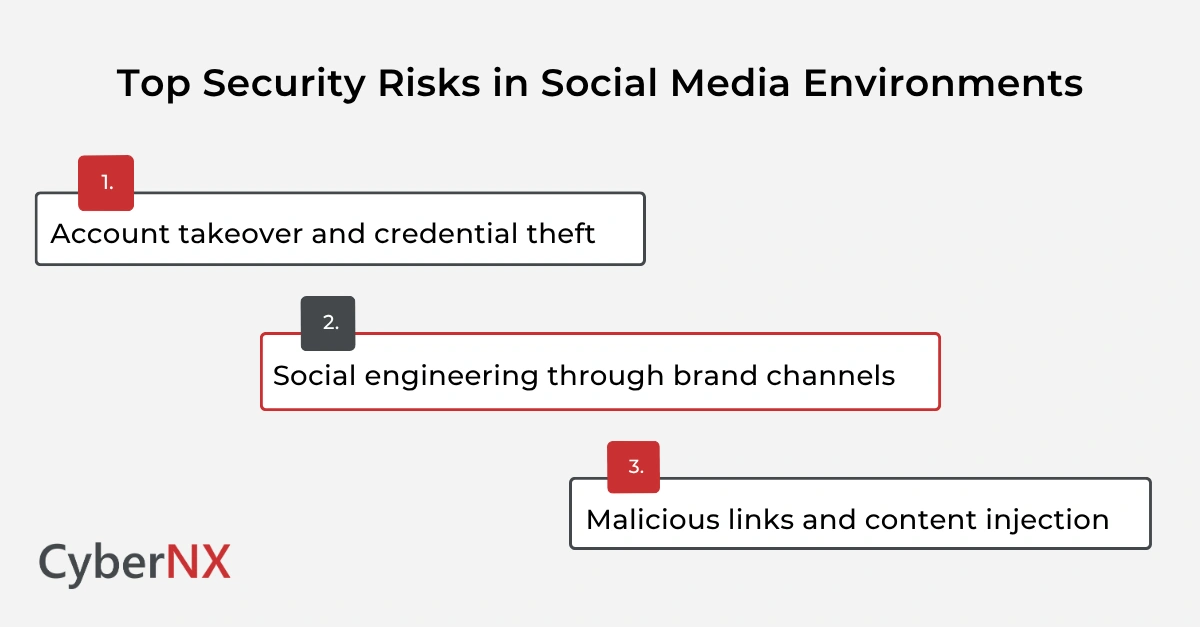
1. Account takeover and credential theft
Attackers frequently target social media accounts through phishing or credential stuffing. A compromised account can be used to spread misinformation, scam customers, or damage brand trust.
We have seen cases where verified brand accounts post malicious links within minutes of compromise. The impact is immediate and widespread. Multi-factor authentication helps, but it is not enough on its own. Access control must be role-based and tightly managed.
2. Social engineering through brand channels
Threat actors often impersonate brands or employees. They create fake profiles or mimic official communication styles. Customers struggle to distinguish between genuine and fraudulent interactions. This leads to financial fraud and trust erosion. Monitoring for impersonation is critical. Quick takedown processes can limit damage.
3. Malicious links and content injection
Social platforms are common vectors for malware distribution. Even legitimate brand pages can unknowingly share compromised links. This risk increases when multiple teams or agencies handle content publishing. Without proper validation, unsafe content can slip through. A simple content approval workflow can prevent such incidents.
Compliance risks and regulatory expectations in India
Compliance is becoming a major driver for social media risk management. Indian organisations must navigate a complex regulatory environment.
1. Data privacy and protection obligations
With the introduction of India’s Digital Personal Data Protection framework, organisations must handle user data carefully. Social media interactions often involve personal data. Customer queries, complaints, and direct messages may contain sensitive information. If mishandled, this can lead to regulatory penalties and loss of customer trust.
2. Industry-specific compliance requirements
For many Indian organisations, social media compliance goes beyond general data protection. Industries like banking, healthcare, and insurance must follow strict regulatory guidelines, where even a single post can create legal exposure. Failure to meet these requirements can lead to compliance risks related to privacy laws, advertising norms, or sector-specific standards. The real challenge is that social media moves fast, while compliance processes often lag behind.
To manage this, organisations need simple but consistent practices. Stay updated on relevant laws, especially data privacy regulations. Document clear social media policies so teams know what is acceptable.
Conduct routine audits to ensure ongoing compliance. And when the stakes are high, consult legal professionals before publishing sensitive content. This approach keeps compliance practical without slowing down business operations.
3. Record keeping and audit trails
Many regulations require organisations to maintain records of communication. Social media interactions are often overlooked in this process. Without proper archiving, businesses may struggle during audits or investigations. We recommend integrating social media activity into broader compliance monitoring systems.
Operational risks and internal challenges
Operational risks are often underestimated. They stem from how organisations manage social media internally.
1. Lack of governance and clear ownership
In many organisations, social media accounts are handled by multiple teams. Marketing, PR, and external agencies may all have access. Without clear ownership, accountability becomes blurred. This increases the risk of errors and delays in incident response. A defined governance model is essential. Each account should have a clear owner and backup.
2. Delayed incident response
Social media incidents move fast. A delay of even a few hours can amplify impact. We often see organisations without a structured response plan. Teams scramble to react, leading to poor decisions. An incident response playbook tailored for social media can make a significant difference.
Building a practical social media risk management strategy
A strong approach does not need to be overly complex. It should be practical and aligned with your broader cybersecurity framework. Start with visibility and know all the accounts linked to your organisation. Many businesses discover unmanaged or forgotten accounts during assessments.
Then focus on control. Limit access, use secure authentication methods and ensure that only authorised personnel can publish content. Monitoring is equally important. Track mentions, impersonation attempts, and unusual activity. Early detection reduces impact.
Finally, prepare for incidents. Define response steps, train teams and run simulations. Small improvements here can prevent major disruptions later.
Conclusion
Social media risk management may seem like a small part of cybersecurity. But its impact is anything but small.
In 2026, Indian organisations must treat it as a core element of digital risk protection. Security risks, compliance requirements, and operational challenges are deeply interconnected.
We believe that a structured, practical approach can help businesses stay ahead. With the right controls, monitoring, and governance, social media can remain a powerful asset rather than a hidden risk.
Looking to strengthen your social media risk management strategy? We work closely with your teams to identify gaps, reduce exposure, and build resilient digital operations. Connect with us to know more about our digital risk protection services.
Social media risk management FAQs
How is social media risk management different from general cybersecurity?
Social media risk management focuses specifically on risks arising from social platforms. It covers account security, brand impersonation, content risks, and compliance, which are not always addressed in traditional cybersecurity frameworks.
What tools are used for social media risk monitoring?
Organisations use tools for brand monitoring, threat intelligence, and account security. These tools help detect impersonation, suspicious activity, and unauthorised content.
How often should social media risks be assessed?
We recommend quarterly assessments at a minimum. However, continuous monitoring is ideal, especially for organisations with high online engagement.
Can small businesses benefit from social media risk management?
Yes. Small businesses are often targeted because they have weaker controls. Even basic measures like access control and monitoring can significantly reduce risk.