Quantum risk is no longer theoretical. While large-scale quantum computers are still evolving, their future impact on cryptography is already shaping today’s security decisions. Algorithms that protect sensitive data now may not survive the quantum era. For regulated and long-lived data, this creates a serious exposure.
This is where Quantum Bill of Materials (QBOM) enters the conversation.
A QBOM brings the same visibility mindset as SBOMs into the quantum context. It helps organisations understand where quantum-vulnerable cryptography exists, how deeply it is embedded, and what needs to change over time.
For security leaders, QBOM is not about reacting to hype. It is about preparing early, making informed decisions, and avoiding rushed migrations later.
This guide explains what QBOM means, why it matters, and how organisations can start building quantum awareness into their security programmes.
What is a Quantum Bill of Materials?
A Quantum Bill of Materials is an inventory of cryptographic assets within an organisation, viewed through a quantum-risk lens.
A QBOM typically captures:
- Cryptographic algorithms in use
- Key lengths and configurations
- Certificates and trust chains
- Protocols protecting data at rest and in transit
- Systems and applications relying on quantum-vulnerable cryptography
Unlike traditional asset inventories, a QBOM focuses on cryptographic dependency and longevity.
How QBOM differs from SBOM
An SBOM lists software components. A Quantum Bill of Materials lists cryptographic components and their exposure to future quantum attacks.
They complement each other. SBOMs show what software you run. QBOMs show how securely that software protects data over time.
Quantum timelines remain uncertain, but risk planning cannot wait. Attackers can collect encrypted data today and decrypt it later using quantum capabilities. This is especially concerning for:
- Financial records
- Intellectual property
- Personal data with long retention periods
- Government and defence-related information
A QBOM helps identify where such data is protected by algorithms likely to fail under quantum attack.
Standards bodies and governments are already preparing for post-quantum cryptography transitions. For example, NIST has been leading work on post-quantum cryptographic standards.
While Indian regulators have not mandated QBOMs yet, early adopters will be better positioned when expectations evolve, just as happened with SBOMs.
Key components of a QBOM
A practical Quantum Bill of Materials focuses on clarity, not complexity.
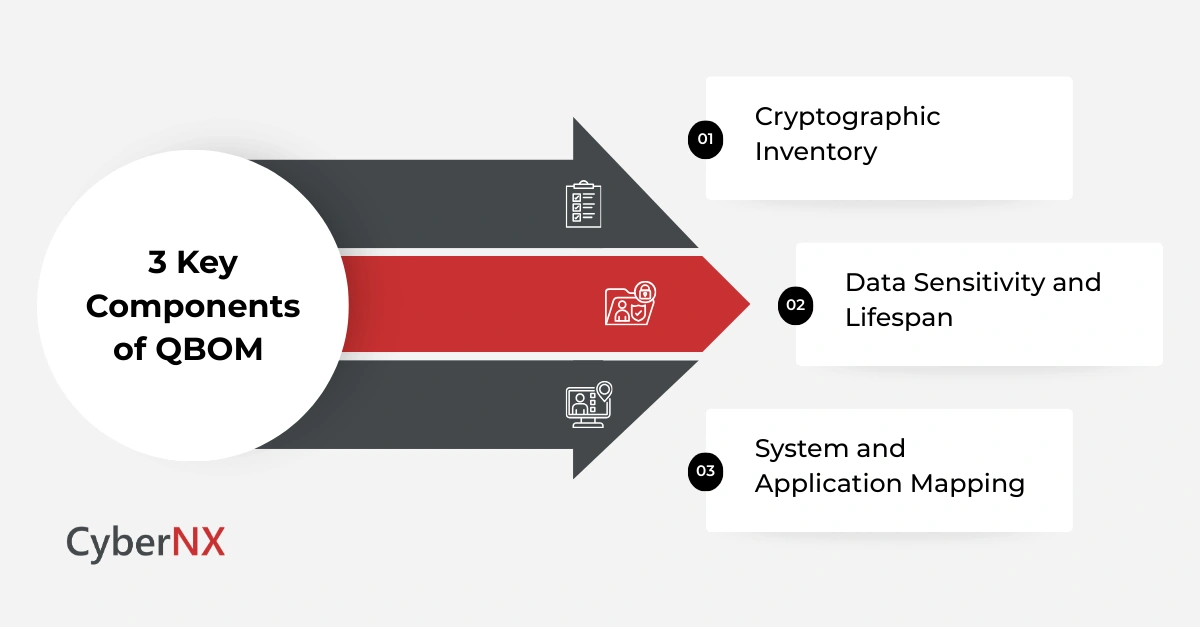
1. Cryptographic inventory
This includes:
- Encryption algorithms such as RSA, ECC, AES
- Hash functions and digital signatures
- Key exchange mechanisms
Each item is mapped to its quantum resistance profile.
2. Data sensitivity and lifespan
Not all data needs the same level of quantum protection. QBOMs classify cryptography based on how long data must remain confidential.
This helps prioritise migration efforts.
3. System and application mapping
QBOMs link cryptographic usage to systems, applications, and business processes. This context is critical for planning change without disruption.
Benefits of implementing a QBOM
QBOM adoption delivers value well before quantum computers mature.
- Informed post-quantum planning: Rather than guessing where to start, QBOMs provide a clear roadmap. Teams know which systems to upgrade first and which can wait.
- Reduced future migration risk: Cryptographic migrations are complex. QBOMs allow phased transitions instead of rushed, high-risk changes.
- Stronger governance and assurance: QBOMs demonstrate proactive risk management. This strengthens conversations with boards, regulators, and customers.
- Better alignment between security and architecture: QBOMs encourage collaboration between security, IT, and enterprise architecture teams, reducing silos around cryptographic decisions.
How QBOM fits with SBOM and future assurance models
QBOM should not exist in isolation.
Complementary visibility
- SBOM answers what software components exist
- QBOM answers how cryptography protects them
Together, they support deeper supply chain and data protection assurance.
Preparing for quantum-aware audits
As quantum risk becomes mainstream, audits will likely examine cryptographic readiness. QBOMs provide evidence of awareness, prioritisation, and planning.
Getting started with QBOM
QBOM implementation does not require a massive programme on day one.
- Start with critical systems: Focus first on systems handling sensitive or regulated data. Identify cryptographic usage and assess quantum exposure.
- Leverage existing inventories: Many organisations already track certificates, keys, or encryption standards. QBOMs build on this foundation.
- Align with long-term roadmaps: QBOMs should feed into architecture and security roadmaps, ensuring post-quantum migration aligns with system lifecycles.
Common QBOM challenges
QBOM adoption is still new, and challenges are expected.
One challenge is visibility. Cryptography is often embedded deep within systems. Another is prioritisation. Not every algorithm needs immediate replacement.
Clear scope, phased execution, and executive sponsorship help overcome these hurdles.
Conclusion
Quantum Bill of Materials is about foresight, not fear. It gives organisations a structured way to understand cryptographic exposure and prepare for change without panic.
Just as SBOMs improved software transparency, QBOMs will shape how organisations approach long-term data protection in a quantum-aware world.
At CyberNX, we help security leaders translate emerging risks into practical action. If you are exploring quantum readiness or reviewing cryptographic risk, a QBOM-led approach provides clarity and control. Connect with our team for SBOM management tool and to start building quantum-aware security today.
QBOM FAQs
Is QBOM relevant if quantum computers are still years away?
Yes. QBOM is about understanding long-term cryptographic exposure, not reacting to immediate attacks. Many organisations store sensitive data that must remain confidential for decades. If that data is protected by quantum-vulnerable algorithms today, the risk already exists due to harvest-now-decrypt-later techniques. QBOM helps identify where early action is justified and where it can wait.
How is a Quantum Bill of Materials different from cryptographic asset management?
Traditional cryptographic asset management tracks certificates, keys, and algorithms for operational hygiene. A QBOM adds a forward-looking layer. It classifies cryptographic assets based on quantum resistance, data lifespan, and business impact. This makes QBOM a strategic planning tool rather than just an operational inventory.
What types of organisations should prioritise QBOM first?
Organisations handling regulated, sensitive, or long-lived data should prioritise QBOM. This includes financial services, government-linked entities, healthcare, telecom, and enterprises managing intellectual property. These sectors face higher risk if encrypted data is compromised years after it is collected.
Can QBOM be automated, or is it a manual exercise?
QBOM can be partially automated by integrating with certificate management systems, encryption policy tools, and application inventories. However, some context, such as data sensitivity and business impact, still requires human input. The most effective QBOMs combine automation with governance.