
Network VAPT is now a backbone of enterprise security readiness. This is because networks today keep expanding across cloud, remote environments and legacy systems. As a result, blind spots could appear quickly and the security decisions become harder.
In this guide, we aim to simplify the process. It shows how network VAPT uncovers hidden risks, helps technical teams prioritise action and strengthens decision-making at the leadership level.
What network VAPT means for modern organisations
VAPT combines Vulnerability Assessment (VA) and Penetration Testing (PT) into one comprehensive exercise. Automated scanning tools are used to detect vulnerabilities in targeted systems, after which pentesters work upon the findings. Network VAPT, focused on network, also blends the two essential practices. A vulnerability assessment identifies weaknesses across internal and external networks, followed by controlled penetration testing that validates real-world impact.
This integrated approach turns scattered risks into a clear roadmap that technical and executive teams can follow with confidence.
Why many teams struggle without structured assessments
Evolving networks often introduce issues that remain unnoticed:
- Older configurations that never got updated
- Remote access paths forgotten over time
- Open ports left behind after project rollouts
- Shadow IT creating entry points unintentionally
These gaps stay dormant until targeted by attackers. A routine network VAPT cycle brings visibility back into the environment and reduces uncertainty.
How network VAPT works
Network VAPT moves through clear phases. Each phase creates a deeper view of risk.
1. Scoping and planning
Every assessment starts with understanding the environment. The scope covers internal segments, exposed assets, VPN paths, cloud-linked components and high-value systems.
2. Vulnerability assessment
Automated scans, as part of the vulnerability assessment, highlight weaknesses such as outdated versions, misconfigurations, unpatched services and unnecessary exposure. These findings form the base layer for the next stage.
3. Penetration testing
Penetration testing simulates how weaknesses behave when exploited. This phase exposes pathways attackers might use to move across different parts of the network. It also reveals how small issues can compound into larger impact.
4. Reporting and remediation guidance
Effective reporting presents findings in clear, structured sections.
Impact-driven prioritisation helps technical teams fix what matters most.
Supporting evidence helps teams validate each issue quickly.
5. Re-testing for closure
Once fixes are implemented, a re-test ensures that vulnerabilities are addressed fully. This step builds assurance for security owners and executive stakeholders.
Network VAPT: how it strengthens business outcomes
Network VAPT provides more than technical clarity. It supports long-term resilience.
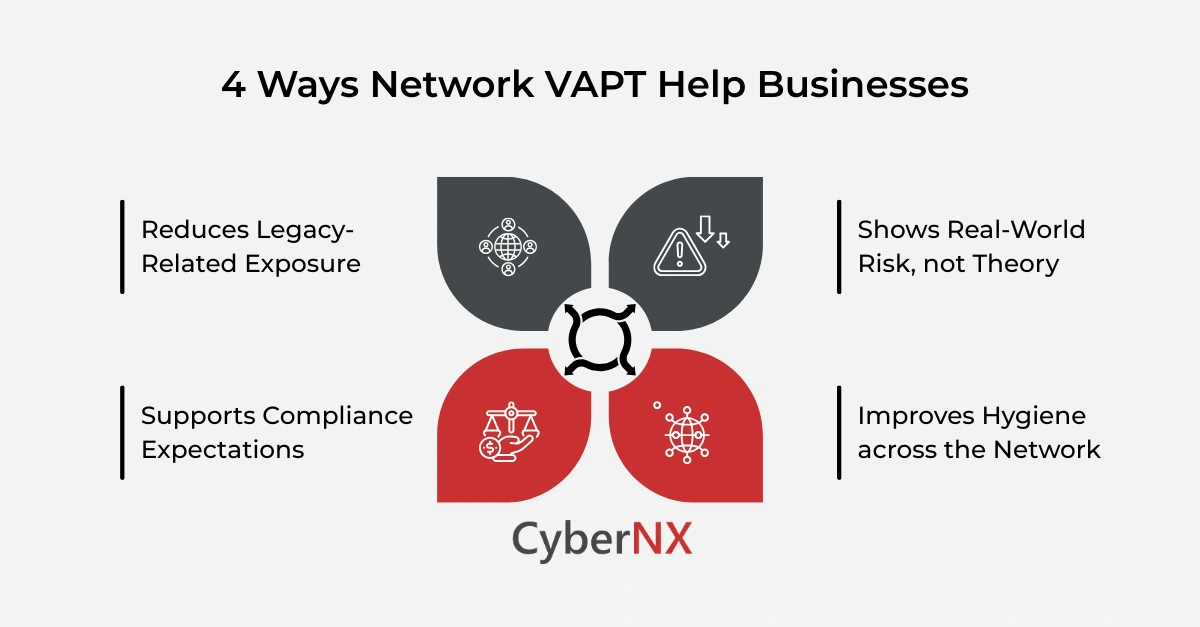
1. Shows real-world risk, not theory
A vulnerability alone does not tell the whole story. VAPT shows how weaknesses behave under realistic conditions. This reduces guesswork when planning budgets, tools and staffing.
2. Improves hygiene across the network
Network VAPT helps uncover:
- Weak authentication flows
- Flat or poorly segmented networks
- Unsecured interfaces
- Forgotten test systems
- Outdated firewall rules
Fixing these strengthens the entire architecture, not just isolated systems.
3. Supports compliance expectations
Many frameworks expect routine VAPT cycles such as ISO 27001, RBI cybersecurity guidelines, SEBI CSCRF and PCI DSS. Clear reports make audits smoother and reduce compliance friction.
4. Reduces legacy-related exposure
Older infrastructure often carries outdated defaults or unsupported components. Network VAPT reveals how such systems influence risk across the environment.
Latest VAPT trends shaping enterprise assessments
Security assessments are evolving. Networks are far more dynamic than before.
1. Attack path visualisation is becoming essential
Teams want clear visibility into how an attacker moves from one system to another. Attack path mapping now helps illustrate these steps, making prioritisation easier for IT teams.
2. Zero trust alignment is now part of the testing narrative
Assessments now evaluate segmentation, role-based access boundaries, identity strength and network trust decisions.
This aligns VAPT outcomes with zero trust journeys many organisations are pursuing.
3. Cloud-native testing is part of every network review
Modern networks blend on-prem and cloud environments. Assessments now include IAM roles, storage exposure, security groups, misconfigured APIs and hybrid connectivity paths.
According to Gartner Security Report 2024: “More than 60 percent of network breaches stem from configuration weaknesses. Regular VAPT remains one of the most effective ways to detect and resolve these issues early.”
What a strong network VAPT report includes
A useful VAPT report should help teams take action immediately. Leaders should look for:
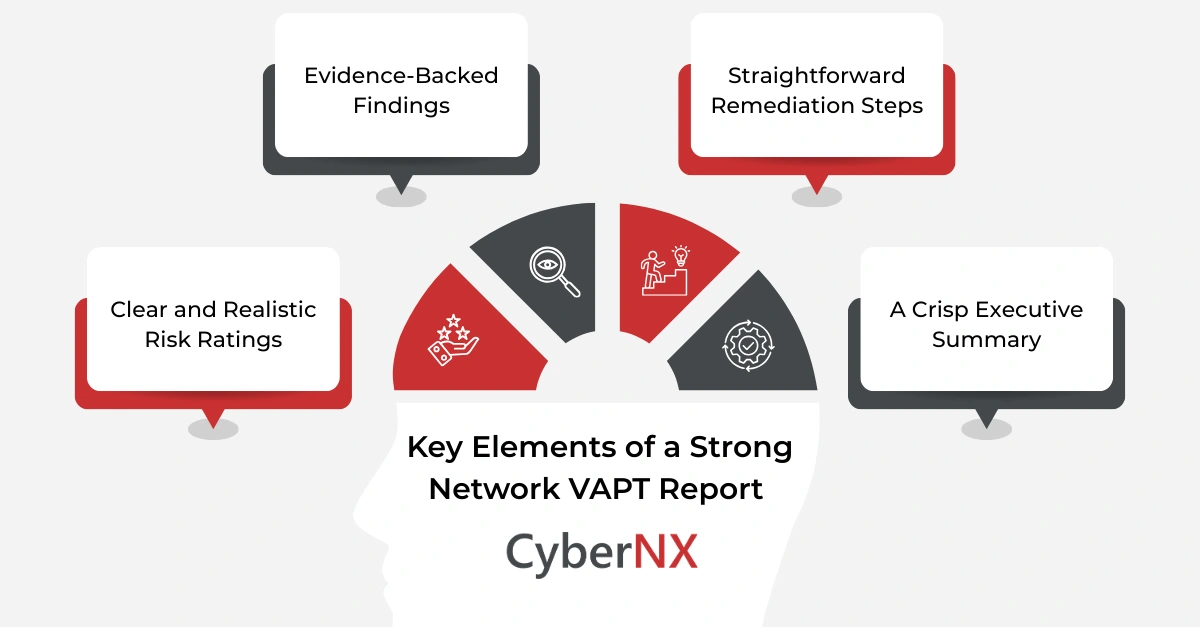
- Clear and realistic risk ratings: Impact and likelihood must be defined in practical terms that both technical and non-technical stakeholders can understand.
- Evidence-backed findings: Screenshots, traces and proof-of-concept details add depth and reduce ambiguity.
- Straightforward remediation steps: Practical, actionable steps help teams fix issues without unnecessary complexity.
- A crisp executive summary: Decision-makers benefit from a high-level view of risk distribution, critical observations and the recommended route forward.
How network VAPT engagements build long-term readiness
Effective network VAPT helps reduce uncertainty. It improves decision-making. It strengthens resilience in measurable ways.
Modern organisations rely on it to:
- Stay ahead of fast-moving threats
- Keep networks clean and well-configured
- Reduce risk from older or forgotten systems
- Build confidence in hybrid and cloud-connected environments
- Support internal and external compliance needs
When done regularly, network VAPT becomes a strategic advantage, not just a security task.
Conclusion
Network VAPT brings clarity to complex networks. It uncovers hidden risks, prioritises what truly matters and supports better decisions across security teams and leadership.
A structured approach helps organisations maintain strong network hygiene and prepare for evolving threats. Explore how our VAPT service can support your next network VAPT cycle and strengthen your security posture.
Network VAPT FAQs
How frequently should network VAPT be conducted for high-risk environments?
High-risk or fast-changing environments benefit from more frequent assessments. Quarterly or biannual cycles help maintain visibility across dynamic networks. If the organisation frequently adds users, expands cloud workloads or introduces new applications, a shorter cycle improves assurance.
Does network VAPT disrupt ongoing operations in any way?
Network VAPT is designed to minimise operational impact. Testing windows are aligned with internal teams. Low-risk techniques are preferred during business hours. High-impact tests are scheduled during approved maintenance windows.
Can network VAPT identify weaknesses created by user behaviour?
VAPT focuses on technical weaknesses, but it can reveal how user actions indirectly create exposure. For example, weak passwords, use of unauthorised tools or improper access habits may become evident through misconfigurations and access gaps.
What skills are required internally to support a VAPT engagement?
Teams typically need basic knowledge of the environment, access ownership, change approval processes and an understanding of critical systems. Deep security expertise is not mandatory. Strong coordination helps ensure smooth testing and timely remediation.