The HBOM framework is gaining quiet but serious attention among cybersecurity leaders. While SBOMs have become mainstream, hardware remains a blind spot for many organisations. Devices enter networks with limited visibility into their components, firmware and origin. That gap creates real risk.
Regulators and national cyber agencies are increasingly clear. Software transparency alone is not enough. Hardware supply chains are complex, global and often opaque. For CISOs, this creates pressure from two sides. Security teams need better visibility, while compliance teams need defensible evidence.
In this blog, we unpack the HBOM framework in a practical way. We look at how leading institutions such as CISA, RBI, SEBI and CERT-In approach hardware transparency. We also explain how organisations can adopt HBOM thinking without adding friction or cost.
What is an HBOM framework?
An HBOM framework defines how organisations document, manage and govern a Hardware Bill of Materials. In simple terms, an HBOM lists the physical components that make up a device. This includes chips, firmware, peripherals and sometimes manufacturing origin.
The framework goes beyond a static list. It defines how HBOMs are created, updated, verified and used across the lifecycle of a device. From procurement to decommissioning, the HBOM framework supports traceability and risk assessment.
Where SBOMs focus on code, HBOM frameworks focus on trust. They answer questions that security leaders increasingly face. What hardware do we rely on? Where did it come from? Can we respond quickly if a component is compromised?
Why hardware transparency is now a regulatory concern
Hardware has become a strategic risk. Nation-state attacks, supply chain disruptions and counterfeit components have forced regulators to act.
1. Cybersecurity and Infrastructure Security Agency (CISA)
In the United States, the Cybersecurity and Infrastructure Security Agency has published guidance on supply chain risk management that explicitly includes hardware. While CISA does not mandate a single HBOM standard, it encourages component transparency and lifecycle tracking as part of Zero Trust and critical infrastructure protection.
In India, regulatory focus is even sharper for certain sectors.
2. Reserve Bank of India (RBI)
The RBI expects regulated entities to maintain strong asset inventories and supply chain risk controls. While RBI circulars often speak in principle, hardware visibility is implicit in expectations around secure infrastructure and third-party risk.
3. Securities and Exchange Board of India (SEBI)
Similarly, the SEBI places responsibility on market participants to manage technology risks. Exchanges, brokers and depositories must demonstrate control over infrastructure components, including hardware used for trading and data processing.
4. CERT-In
The CERT-In has also highlighted risks related to compromised devices and firmware vulnerabilities. Its advisories increasingly reference asset identification and timely response, both of which depend on accurate hardware records.
Outside India, agencies such as the UK NCSC and Australia’s ACSC echo similar themes. Hardware supply chain risk is now a global concern, even if terminology differs.
HBOM vs. SBOM
Many organisations assume SBOMs cover most risks. Our experience shows otherwise.
SBOMs provide visibility into software components. HBOM frameworks provide visibility into the physical foundation that software runs on. Firmware vulnerabilities, malicious chips and unsupported hardware can undermine even the best software controls.
Think of HBOM and SBOM as complementary. Together, they enable full-stack transparency. Separately, each leaves blind spots attackers can exploit.
Key elements of an effective HBOM framework
An HBOM framework is not just a document. It is a set of practices that fit into existing security and governance models.
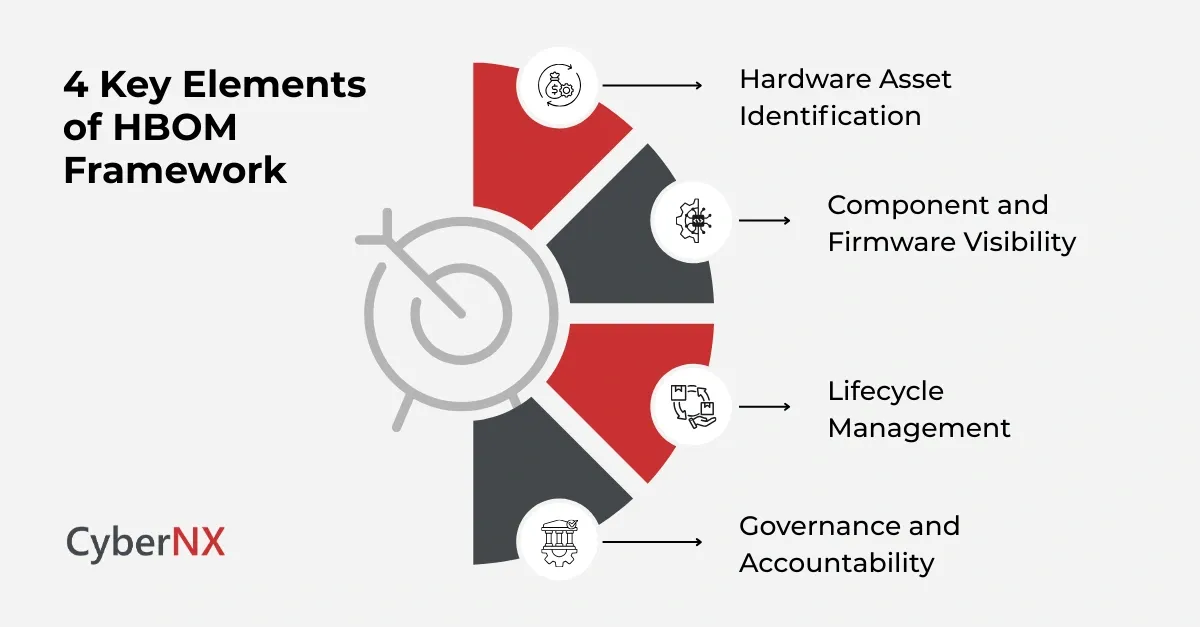
- Hardware asset identification: First, asset identification is essential. Organisations must know which devices they own, where they are deployed and who is responsible for them. This sounds basic, yet many enterprises struggle at scale.
- Component and firmware visibility: Second, component detail matters. An HBOM should include major hardware components, firmware versions and vendor information. The level of detail should balance risk and practicality.
- Lifecycle management: Third, lifecycle management ties everything together. Devices change over time. Firmware updates, component replacements and decommissioning must be reflected in the HBOM.
- Governance and accountability: Finally, governance defines accountability. Who maintains HBOMs? Who reviews risk? How is information shared with regulators or auditors? Without governance, HBOMs quickly become outdated.
Practical challenges in adopting an HBOM framework
Despite clear benefits, adoption is not without hurdles. Common challenges organisations face:
- Legacy hardware with poor documentation
- Limited cooperation from hardware vendors
- Fragmented asset management systems
- Additional workload for already stretched security teams
These challenges highlight the importance of integration and prioritisation.
Where HBOM fits into enterprise risk management
An HBOM framework should support broader risk objectives, not sit in isolation. HBOM strengthens enterprise risk management by:
- Improving third-party and supplier risk assessments
- Enabling faster and more accurate incident response
- Supporting board-level discussions with tangible data
- Reducing friction during audits and regulatory reviews
For regulated industries, this linkage is especially valuable.
Conclusion
The HBOM framework is emerging as a critical pillar of modern cybersecurity and compliance. While formal mandates are still evolving, regulatory signals are clear. Hardware transparency matters.
Organisations that invest early gain better risk visibility, stronger resilience and smoother regulatory engagement. Those that delay may find themselves reacting under pressure.
If you are exploring how HBOM fits into your security or compliance roadmap, now is the right time to start the conversation.
We work alongside security teams to strengthen hardware and supply chain visibility. Connect with our experts today to discuss how SBOM management tool can help your business. Else, you can consult to know how HBOM framework can support your security and regulatory goals.
HBOM framework FAQs
Is there a global standard HBOM framework today?
No single global standard exists. Most frameworks are principle-based and aligned with supply chain risk management guidance.
Do hardware vendors provide HBOMs by default?
Some do, but coverage is inconsistent. Many organisations must request or build HBOM data themselves.
How detailed should an HBOM be?
Detail should match risk. Critical systems need deeper visibility than low-risk endpoints.
Can HBOM data support incident response?
Yes. Accurate HBOMs help teams quickly identify affected devices and firmware during incidents.