Every organisation today has a growing digital footprint. As soon as you use cloud platforms, SaaS tools, APIs and employee devices, the attack surface expands. Security teams, as a result, often deploy multiple tools to monitor this risk. However, more than tools, clear measurement adds value and clarity.
This is why digital risk monitoring metrics matter. They translate complex security signals into actionable insight. CISOs can prioritise threats, allocate resources and communicate risk to leadership.
In 2026, the modern threats are taking new shapes. Attackers are increasingly exploiting exposed assets, leaked credentials and supply chain weaknesses. Security leaders need visibility beyond the internal network.
Tracking the right metrics helps organisations spot external threats early and reduce potential damage. This blog outlines the key metrics CISOs should track and why they matter for modern enterprises.
Monitoring, metrics and modern enterprises
Digital risk monitoring focuses on threats outside the traditional security perimeter. This includes brand impersonation, exposed infrastructure and leaked credentials. However, monitoring alone is not enough. Metrics help convert raw data into decision making signals.
For CISOs, these metrics help:
- Measure external exposure across digital assets
- Identify weak points before attackers exploit them
- Track risk reduction efforts over time
- Communicate risk clearly to executive teams
Without measurement, external risk monitoring often becomes reactive. With the right monitoring metrics, organisations move towards proactive defence.
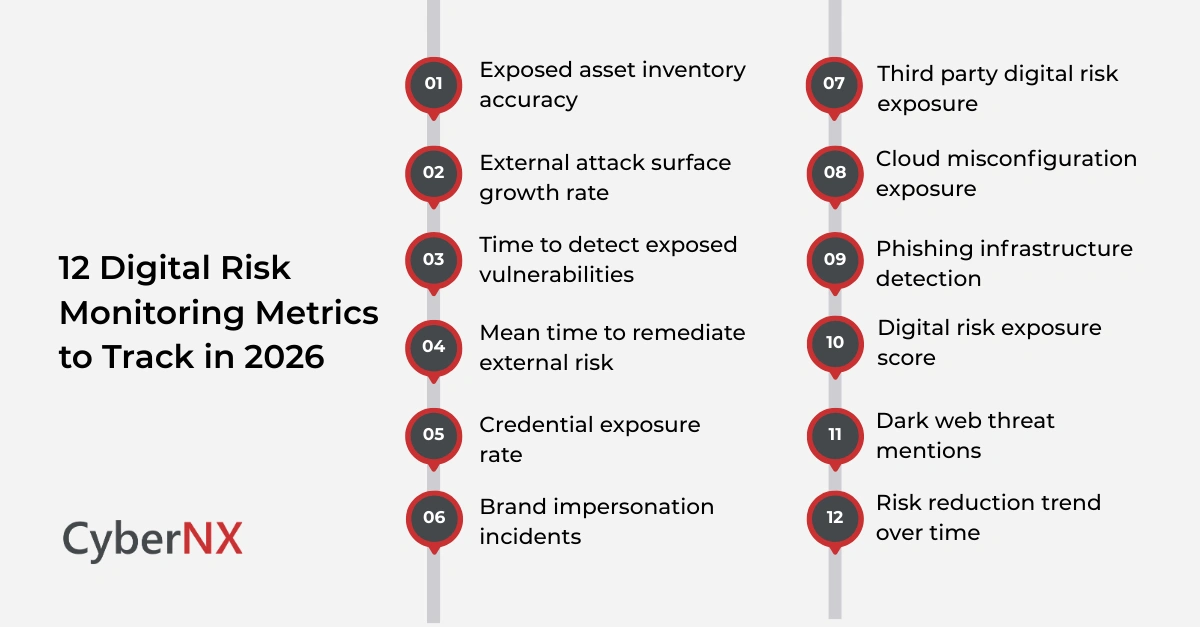
Key digital risk monitoring metrics CISOs should track in 2026
The following metrics provide a practical view of external risk exposure. Each one highlights a different layer of the organisation’s digital footprint.
1. Exposed asset inventory accuracy
Many security incidents begin with unknown assets. Shadow IT, forgotten cloud instances or test environments create blind spots. This metric measures the difference between known assets and externally discoverable assets.
Important indicators include:
- Untracked domains
- Unknown cloud instances
- Publicly accessible storage buckets
- Shadow SaaS applications
High accuracy means the security team has visibility across the digital footprint.
2. External attack surface growth rate
Organisations constantly add new systems, APIs and digital services. Each addition expands the attack surface. This metric tracks how quickly the organisation’s external exposure grows over time. It measures:
- New internet facing services
- Newly exposed APIs
- Additional cloud endpoints
- Newly registered domains
A rapidly expanding attack surface increases risk if security controls do not scale at the same pace.
3. Time to detect exposed vulnerabilities
Publicly exposed vulnerabilities are among the most dangerous digital risks. This metric tracks the time between vulnerability exposure and detection by the security team. It includes:
- Misconfigured servers
- Unpatched internet facing systems
- Vulnerable web applications
- Exposed development environments
Faster detection reduces the window attackers can exploit.
According to research from Gartner, organisations that continuously monitor their external attack surface reduce breach exposure time significantly compared to periodic assessments.
4. Mean time to remediate external risk
Detection is only the first step. Remediation speed determines the real security impact. This metric measures how long it takes to resolve identified external risks. Examples include:
- Fixing misconfigured cloud storage
- Closing open ports
- Patching exposed systems
- Removing vulnerable applications
Shorter remediation times directly reduce attacker opportunity.
5. Credential exposure rate
Credential leaks remain one of the most common causes of account compromise. This metric tracks how frequently employee credentials appear in breach databases or dark web sources. Indicators include:
- Corporate email credentials in breach datasets
- Credentials shared in underground forums
- Compromised partner or vendor accounts
6. Brand impersonation incidents
Threat actors increasingly impersonate organisations to conduct phishing campaigns or scams. This metric track:
- Fake domains resembling company brands
- Phishing websites
- Social media impersonation accounts
- Fraudulent mobile applications
Brand abuse damages customer trust and often becomes a gateway to phishing attacks.
7. Third party digital risk exposure
Vendors, suppliers and service providers often expand the organisation’s risk profile. This metric measures security exposure across the third-party ecosystem. Indicators include:
- Vulnerable vendor portals
- Partner domain compromises
- Supply chain infrastructure exposure
Supply chain attacks remain a growing concern for enterprise security leaders.
8. Cloud misconfiguration exposure
Cloud adoption continues to accelerate. At the same time, configuration errors remain common. This metric tracks externally visible misconfigurations across cloud platforms. Common examples include:
- Public storage buckets
- Open administrative interfaces
- Misconfigured identity policies
- Unrestricted database access
It matters because cloud misconfigurations frequently expose sensitive data.
9. Phishing infrastructure detection
Attackers often prepare phishing campaigns before launching them. Monitoring suspicious infrastructure helps security teams detect threats earlier. It measures:
- Newly registered phishing domains
- Domains using brand variations
- Active phishing kits targeting the organisation
This is an important metric because early detection allows security teams to take down malicious infrastructure quickly.
10. Digital risk exposure score
Many organisations combine multiple signals into a composite risk score. This score aggregates several monitoring metrics into a single indicator. It often includes:
- Asset exposure levels
- Vulnerability severity
- Credential leaks
- Brand impersonation incidents
A consolidated score helps executives understand the organisation’s external risk posture quickly.
11. Dark web threat mentions
Threat actors frequently discuss targets before launching attacks. Monitoring dark web activity provides early warning signals. It tracks:
- Mentions of company domains
- Discussions involving company infrastructure
- Data sale listings involving company assets
Threat intelligence helps security teams prepare for potential attacks.
12. Risk reduction trend over time
Security improvements should reflect in measurable results. This metric tracks how overall exposure changes across months or quarters. It helps measure:
- Reduction in exposed assets
- Faster remediation timelines
- Decrease in credential leaks
- Lower phishing domain activity
Leadership teams need clear evidence that security investments deliver measurable outcomes.
Digital risk monitoring in 2026
Digital ecosystems continue to grow. Cloud adoption, remote work and API driven platforms expand organisational exposure. Traditional perimeter-based security models no longer provide sufficient visibility. Modern security programmes rely on continuous monitoring of the external attack surface. The right digital risk monitoring metrics provide the foundation for this visibility. For CISOs, the goal is not simply collecting data but building a measurable and manageable security posture across the entire digital footprint.
Conclusion
External threats are becoming more sophisticated. Attackers scan digital assets continuously, searching for weaknesses. Clear measurement helps security leaders stay ahead. The right digital risk monitoring metrics reveal hidden exposures, track improvement and support informed decision making. Every organisation has a unique digital footprint. Monitoring that footprint effectively requires both visibility and actionable metrics.
At CyberNX, our team works closely with organisations to strengthen digital risk visibility. We help security leaders monitor external exposure, prioritise remediation and reduce attack surface risk. Every improvement in visibility strengthens resilience. And every metric tracked brings your organisation closer to a safer digital environment.
Speak with our experts today to explore how our digital risk monitoring services can strengthen your security strategy.
Digital risk monitoring metrics FAQs
What is digital risk monitoring in cybersecurity?
Digital risk monitoring involves tracking external threats that target an organisation’s online presence. This includes exposed assets, leaked credentials, phishing domains and brand impersonation.
How often should CISOs review digital risk monitoring metrics?
Security teams should monitor these metrics continuously. Leadership reviews typically occur monthly or quarterly to track long term exposure trends.
Which tools help track digital risk monitoring metrics?
Security teams often use attack surface management platforms, threat intelligence tools and brand protection monitoring solutions to collect these metrics.
How do digital risk monitoring metrics support compliance requirements?
Many regulations require organisations to monitor vulnerabilities, manage third party risk and protect sensitive data. These metrics help demonstrate ongoing security oversight.